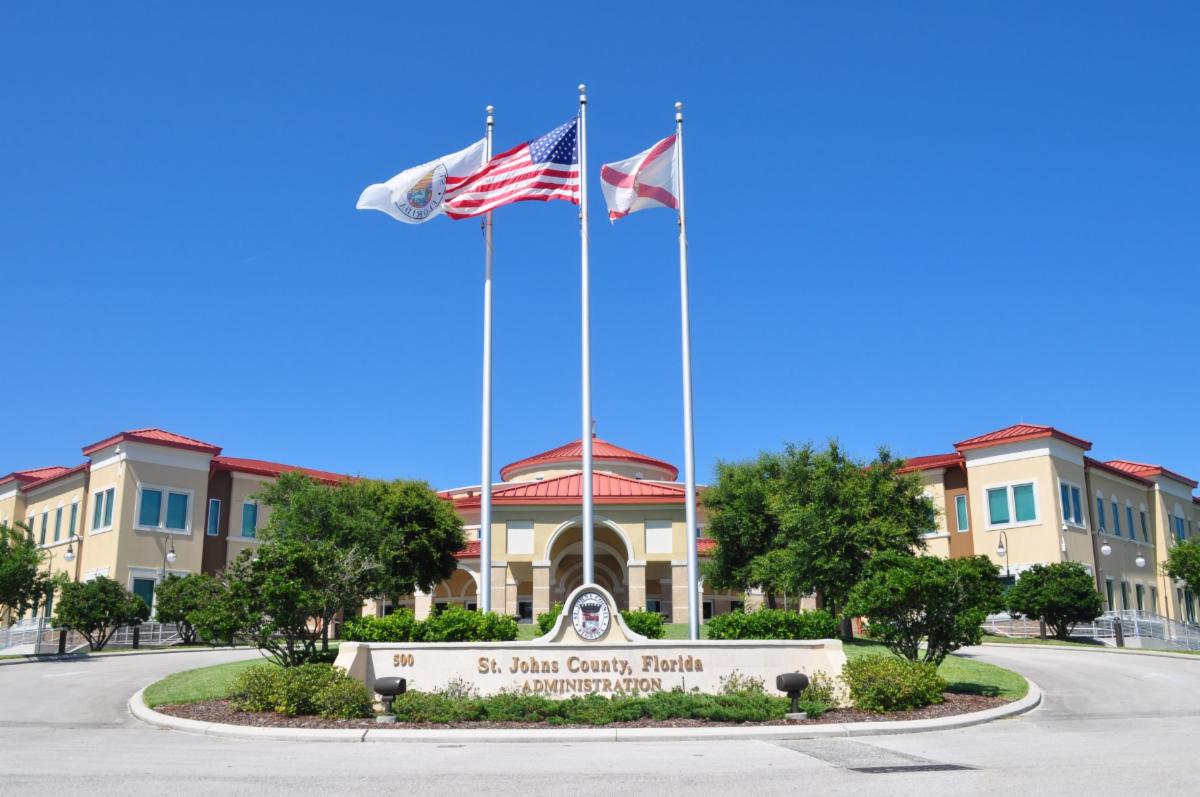
St. Johns County could lose an estimated $113 million in annual property tax revenue by 2029 following Florida voters' approval of Amendment 3 on Tuesday, Nov. 3, according to projections presented by county officials.
The constitutional amendment passed with approximately 62% of the statewide vote, exceeding the 60% required for adoption. It increases the homestead exemption for property taxes other than school district taxes to $150,000 beginning Jan. 1, 2027, and $250,000 beginning Jan. 1, 2028, according to WJHG.
The measure also reduces the annual assessment growth cap for non-homestead properties, including commercial buildings and rental properties, from 10% to 5%. The expanded homestead exemption is subject to future inflation adjustments.
Although homeowners eligible for the exemption will see lower non-school property taxes, local governments face the prospect of substantial reductions in revenue used to fund public services.
County officials warn of budget consequences
St. Johns County officials previously estimated that the amendment could reduce county property tax revenue by approximately $113 million annually by 2029, according to a July 13 report on county budget discussions.
Commissioner Christian Whitehurst illustrated the potential impact by comparing the projected revenue loss with a county budget of approximately $400 million.
Subtracting $113 million would leave about $287 million, he said. With the sheriff's office and fire department accounting for nearly $250 million, Whitehurst estimated that roughly $37 million would remain for other county services, including parks and road maintenance.
The calculation was intended to illustrate the scale of the potential reduction, rather than represent a formally adopted future budget. The actual effect will depend on the county's revenue sources, spending decisions and implementation of the amendment.
County Administrator Joy Andrews previously described the proposed changes as potentially "revolutionary" or "catastrophic," depending on perspective.
County staff had already discussed possible cost-saving measures, including leaving vacant positions unfilled and examining whether some services could be provided by private contractors, according to the July report.
The county maintains approximately 1,100 miles of roads, along with parks and other infrastructure that rely on public funding.
Local governments face uncertainty
The amendment drew opposition from public officials and organizations concerned about its potential effects on essential services.
The Florida Sheriffs Association opposed the measure, citing the possibility of reduced funding for law enforcement and other public safety operations.
Several Alachua County and Gainesville commissioners also publicly opposed the proposal before the election, according to The Independent Florida Alligator.
Chris Hand, an attorney and political analyst, described the amendment as "an earthquake for local governments" in comments shared by WJCT News on X on Nov. 4.
Hand warned that smaller municipalities could face particularly severe financial consequences, describing the potential effect on two local governments as an "extinction level event."
Those warnings reflect concerns about projected revenue losses, not confirmed cuts to specific services or departments.
Revenue reductions expected beginning in 2027
The amendment's first expanded exemption takes effect Jan. 1, 2027, with the larger exemption scheduled for Jan. 1, 2028.
Because Florida property taxes are generally billed later in the calendar year, local governments are not expected to experience the first major effects on property tax collections until fall 2027, according to Spectrum Bay News 9.
A larger impact is expected in 2028 as the exemption increases to $250,000.
School district property taxes are excluded from the expanded exemption. The changes primarily affect non-school property tax revenue collected by counties, municipalities and other eligible taxing authorities.
St. Johns County's projected $113 million loss remains an estimate. The amount ultimately lost will depend on taxable property values, the application of the new exemptions and assessment limits, and future local budget decisions.